Why You Can't Stop Thinking About Your Panic Attacks (And Why It May Actually Be Keeping Them Going)

If you've ever thought...
"Why can't I stop thinking about my panic attacks?"
"Why do I keep replaying that one panic attack over and over?"
"Why do I spend all day trying to figure out if another one is coming?"
...you're definitely not alone.
Most people assume panic disorder is only about the panic attacks themselves.
But what I see over and over again in therapy is that the panic attacks aren't always what take over someone's life.
It's everything they start doing in between the panic attacks.
One of the biggest things? Mental compulsions.
They're completely invisible, which makes them incredibly sneaky.
Unlike obvious behaviors like avoiding highways or refusing to go into crowded stores, mental compulsions happen entirely inside your head. They often feel productive. They can even feel responsible. You may think they're helping you prevent another panic attack.
Unfortunately, they're usually doing the exact opposite.
What Are Mental Compulsions?
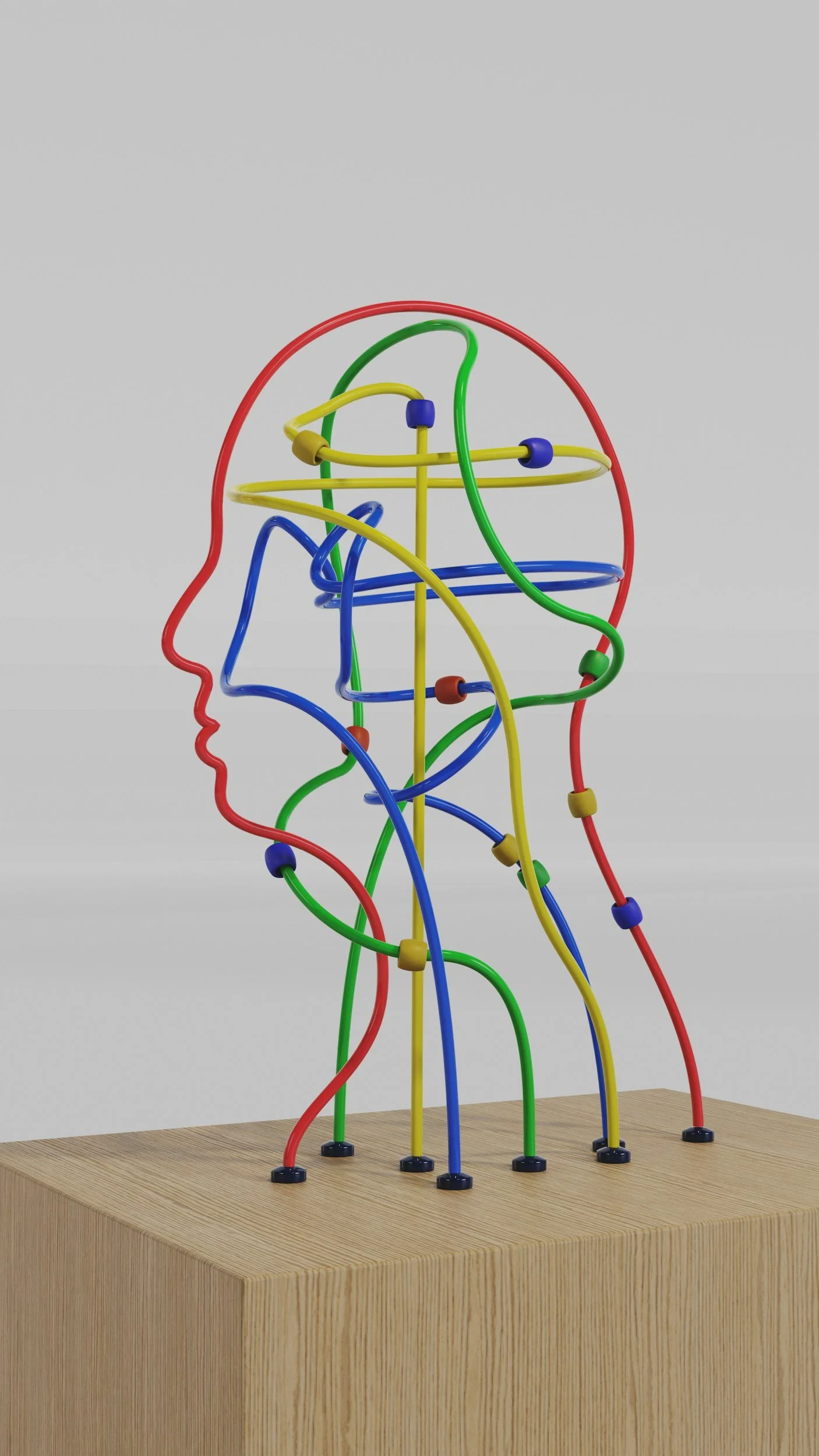
Mental compulsions are repetitive thinking habits that are done to try to reduce anxiety, gain certainty, or prevent something bad from happening.
Many people with panic disorder don't realize they're doing them.
In fact, they often tell me,
"I'm not avoiding anything. I'm just trying to understand what's happening."
Or,
"I'm just trying to prepare myself in case I panic again."
That makes complete sense.
The problem is that panic disorder loves when we try to solve it.
Every time we mentally engage with panic in an attempt to feel safer, we're unintentionally teaching our brain that panic is dangerous and needs our attention.
The brain responds exactly how you'd expect.
It keeps sending more panic.
Mental Compulsions That Commonly Show Up With Panic Disorder

Rumination
Rumination is one of the most common ones I see.
It can sound like:
Why did I panic there?
What caused that panic attack?
What if I had noticed the symptoms sooner?
What if next time it's worse?
Why can't I just get over this?
Hours can disappear trying to analyze panic from every possible angle.
It feels like you're solving a problem.
In reality, you're feeding the anxiety.
Anxiety loves questions that don't have answers.
Reassurance Seeking
This one is especially sneaky because reassurance feels good...
for about five minutes.
You might find yourself:
Googling symptoms.
Searching Reddit to see if someone else experienced the same thing.
Reading success stories hoping yours will be the same.
Asking loved ones if they think you'll panic.
Trying to convince yourself you'll be okay.
The relief usually doesn't last.
Instead, your brain learns,
"Whenever panic shows up, we need reassurance."
So it asks for more reassurance next time.
And the cycle continues.
I've written before that what ifs don't need answered. They're just anxious thoughts.
Every time we answer a what-if question, anxiety usually comes back with another one.
Mental Review
This one surprises people.
You may replay your last panic attack over and over.
Sometimes people tell me they're doing this because they're trying to "learn from it."
Others imagine future panic attacks in great detail because they hope they'll feel more prepared if it actually happens.
Again, it makes sense.
But notice the message your brain receives.
"Panic is so dangerous that we need to rehearse it every day."
No wonder it keeps bringing panic to your attention.
Mental Checking
This is one of the hardest compulsions to notice because it becomes automatic.
You may constantly check:
Is my heart beating faster?
Am I getting dizzy?
Do I feel trapped?
Am I breathing normally?
Is this anxiety?
Is this the start of a panic attack?
Before long, you're scanning your body hundreds of times a day without even realizing it.
The more you monitor your body, the more sensations you notice.
The more sensations you notice, the more anxious you become.
And the cycle keeps going.
Panic Disorder and Pure O OCD Can Look Very Similar

Many people are surprised to learn there can be overlap between panic disorder and Pure O OCD.
Pure O isn't actually "pure" because compulsions are still happening.
They're just mental instead of physical.
Someone may appear calm on the outside while internally they're:
analyzing
reviewing
reassuring themselves
checking
mentally arguing with anxious thoughts
trying to find certainty
These mental compulsions can become just as life-limiting as physical avoidance.
If this sounds familiar, it doesn't necessarily mean you have OCD.
But it can be an important piece of the puzzle, and it's something worth discussing with a therapist who understands both panic disorder and obsessive-compulsive patterns.
The Goal Isn't to Think Better

This is where my approach to therapy is different from what many people expect.
Most of my clients have already spent years trying to fight panic.
They've learned breathing exercises.
They've searched Google.
They've watched YouTube videos.
They've memorized coping skills.
They've tried to convince themselves they'll be okay.
They've done everything they can to stop panic from happening.
Yet they're still terrified of the next panic attack.
That's because recovery isn't about becoming really good at fighting anxiety.
It's about becoming willing to stop fighting it.
Using Exposure and Response Prevention (ERP), we gradually practice allowing anxiety and panic to exist without doing all the things that have been keeping the cycle alive.
That includes the invisible mental compulsions.
Instead of trying to answer every what-if...
Instead of reviewing every panic attack...
Instead of checking your body every few minutes...
We begin practicing something different.
We notice the urge.
And we choose not to follow it.
That's uncomfortable at first.
But over time, that's exactly how your brain learns that panic isn't actually dangerous.
Panic Disorder Therapy in Reston, Virginia (Virtual Throughout Virginia)

If you're exhausted from constantly thinking about panic attacks, avoiding places, or worrying about the next one happening, know that you're not the only one.
Panic disorder can make your world feel smaller and smaller over time. But it doesn't have to stay that way.
I specialize in helping adults who struggle with panic attacks, panic disorder, agoraphobia, and the overlap between panic disorder and obsessive thinking. My practice is fully virtual, allowing me to work with adults throughout Virginia, including Reston, Herndon, Vienna, Fairfax, Arlington, Alexandria, Ashburn, Leesburg, and surrounding communities.
If you've spent years trying to make panic go away, therapy may look different than you expect. Instead of learning more ways to fight anxiety, we'll work on changing your relationship with it so it no longer runs your life.
Disclaimer: This article is intended for educational purposes only and is not a diagnosis. Mental compulsions can occur in several anxiety-related conditions, and not everyone who experiences them has OCD. If you think mental compulsions may be playing a role in your panic attacks, consider reaching out to a licensed mental health professional for an individualized assessment.
If you're looking for a panic attack therapist in Reston, Virginia, or anywhere in Virginia, DC, Maryland, Indiana and Michigan through virtual therapy, I currently have a few openings for free 15-minute consultation calls. There's no pressure and no obligation—just a chance to talk about what's been going on, ask questions, and see whether we'd be a good fit to work together.