Stop Trying to Answer Your What If Thoughts
What ifs don’t need answered. They are just anxious thoughts. Have you ever tried to reassure your what if thoughts? How did it go? There’s a good chance you didn’t feel much better. Sometimes we get short term relief from answering our what if thoughts with reassurance, but we typically still end up chasing more. Reassuring our what ifs doesn’t actually help us. It actually tends to make our anxiety worse.
Disclaimer: The content discussed here is geared towards individuals struggling with an irrational fear or a phobia of discomfort that comes with panic and anxiety, leading to avoidance that alters their lifestyle in an extreme manner. This content is not about minimizing the effects of anxiety. In no way is this content a blanket statement for all anxiety and panic attacks. Please seek out support with a licensed therapist, whether that be Kate or another clinician to receive one on one support and an individualized treatment plan.
Reassuring Your Anxiety is Making it Worse

Panic attacks and agoraphobia thrive on our reassurance. Meaning, they will keep coming back even stronger the more we try to answer our anxious what if thoughts. Anytime you are trying to find an answer to a what if question for comfort, remember that this is making the anxiety stronger. I know how tempting it is to try to give these thoughts some comfort, and you don’t have to do this perfectly 100% of the time (which is impossible).
Even If

Instead of spiraling while trying to answer your what ifs, try this: turn the what if question into a what if statement with even if.
What if I have a panic attack?
Even if I have a panic attack…
What if I feel trapped?
Even if I feel trapped…
What if I freak out?
Even I freak out…
…I will get through it.
Answering What ifs Keeps Us Stuck

What if thinking can keep us stuck in a spiral. What ifs are the same as coulds. You COULD have a panic attack. You COULD freak out. Anything COULD happen. But it’s not happening now and there’s only a slim chance it could. Fighting off a “could thought” is exhausting and doesn’t get us anywhere.
More: Anxiety Thrives on Our Fear and Control of it
Yes, Period.
Another way to stop fighting coulds and answering what ifs is to end the sentence with a yes, period. The issue is not the what if thought. It's what you’re doing with the what if thought. Are you following the thought down the spiral, or are you letting it be? Try redirecting with a period and a yes.
What if I have a panic attack?
Yeah, I might. Period.
What if I feel trapped?
Yeah, I could. Period.
What if I freak out?
Yeah, that may happen. Period.
Your brain is watching what you do when what ifs start popping up. Don't focus on how you feel. Instead, focus on how you are acting. When a what if question pops into your mind, do you stop what you are doing and try to make it go away by making it feel better? If so, your brain and emotions will follow. They will think you are in danger until this what if question is solved (and it won’t be). So instead, ACT with your body how you would if the what if wasn’t important. If you didn’t care about it or thought it was silly or boring. Your brain and emotions will then follow.
For us anxious people, how we feel on the inside is not a good gauge for determining if we are safe or okay. We may always feel anxious and have what ifs spinning around our minds. That’s not the problem. The problem is created when we try to get rid of what ifs by giving them attention and trying to find answers.
What ifs are completely normal for everyone to have, but we don’t have to take them seriously. Next time you find yourself spiraling with what ifs, remember that answering them will only make them louder. Let them be, make it an even if statement, and put a yes, period at the end.
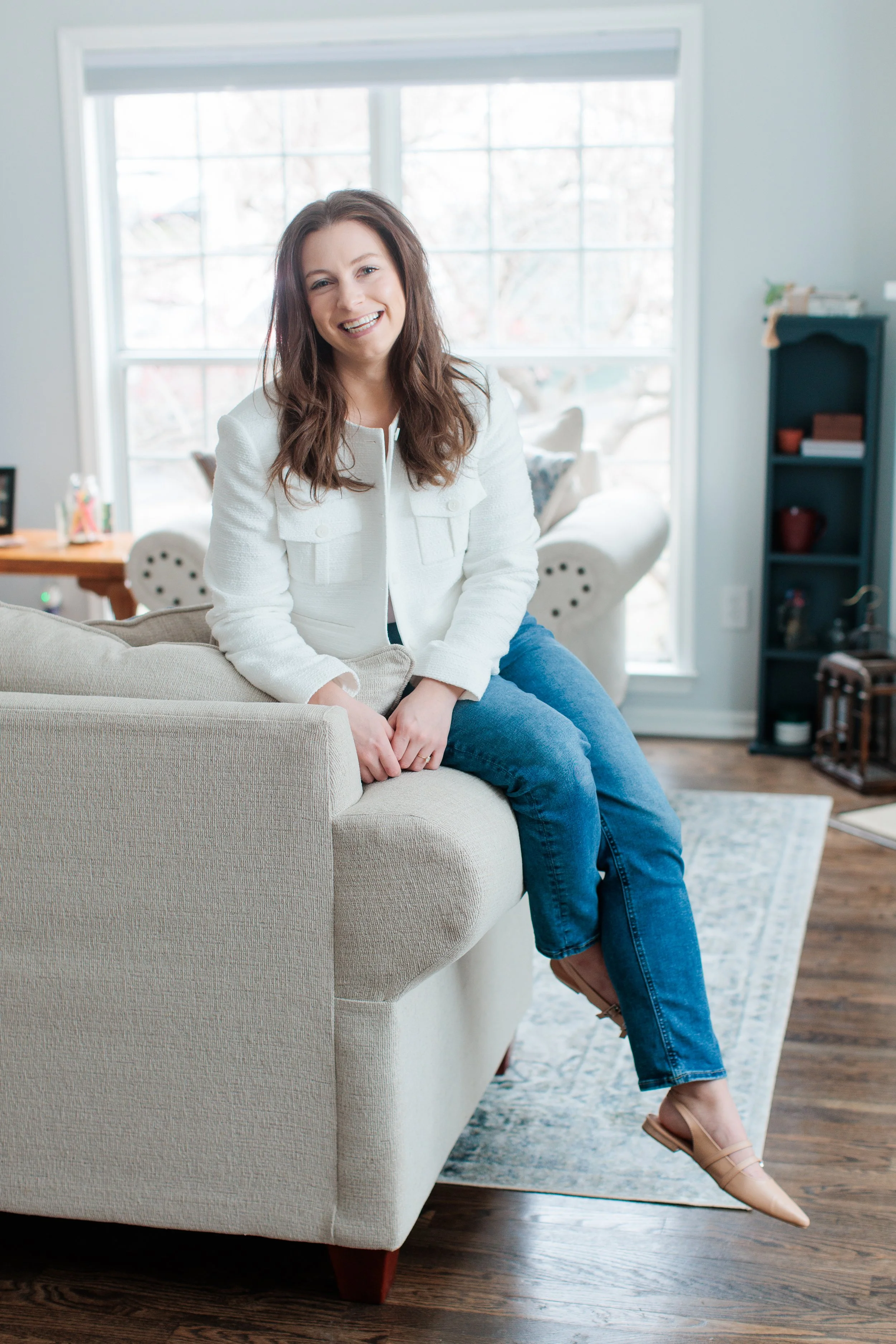
Kate is a licensed therapist who specializes in treating panic attacks and agoraphobia. Kate uses evidence-based modalities such as CBT, ACT, and EMDR. She offers virtual therapy sessions and works with clients who are located in Virginia, Washington DC, Maryland, Indiana & Michigan. Kate also uses psychoeducation with clients, helping them to keep in mind there is no magical quick fix to anxiety or panic attacks and recovery lies in the practice of allowing and feeling the anxious thoughts and feelings versus trying to get rid of them.
Click here to schedule a consultation with Kate or click here to learn more about her practice.
Disclaimer* The content provided in this blog is intended for educational purposes only and is not a substitute for professional therapy or medical advice. While I strive to ensure the accuracy of the information shared, I cannot guarantee that all information is current or correct. Readers are advised to consult with a qualified healthcare professional before making any decisions based on this post.