
Online Therapy for Panic Disorder & Agoraphobia

Specialized Virtual Exposure Therapy for Adults in Virginia, Washington DC, Maryland, Indiana, and Michigan
You've tried breathing exercises, coping skills, reassuring yourself, and just about everything else to stop panic attacks.
But you're still afraid of having another one.
Maybe you've stopped driving on highways, avoid traveling far from home, or only go certain places if someone you trust comes with you.
And now you're wondering whether online therapy can actually help with something that feels so physical and overwhelming.
Online Exposure and Response Prevention (ERP) therapy is an evidence-based treatment approach for panic disorder and agoraphobia that helps you stop fearing panic, overcome avoidance, and get back to living your life without constantly worrying about another panic attack.
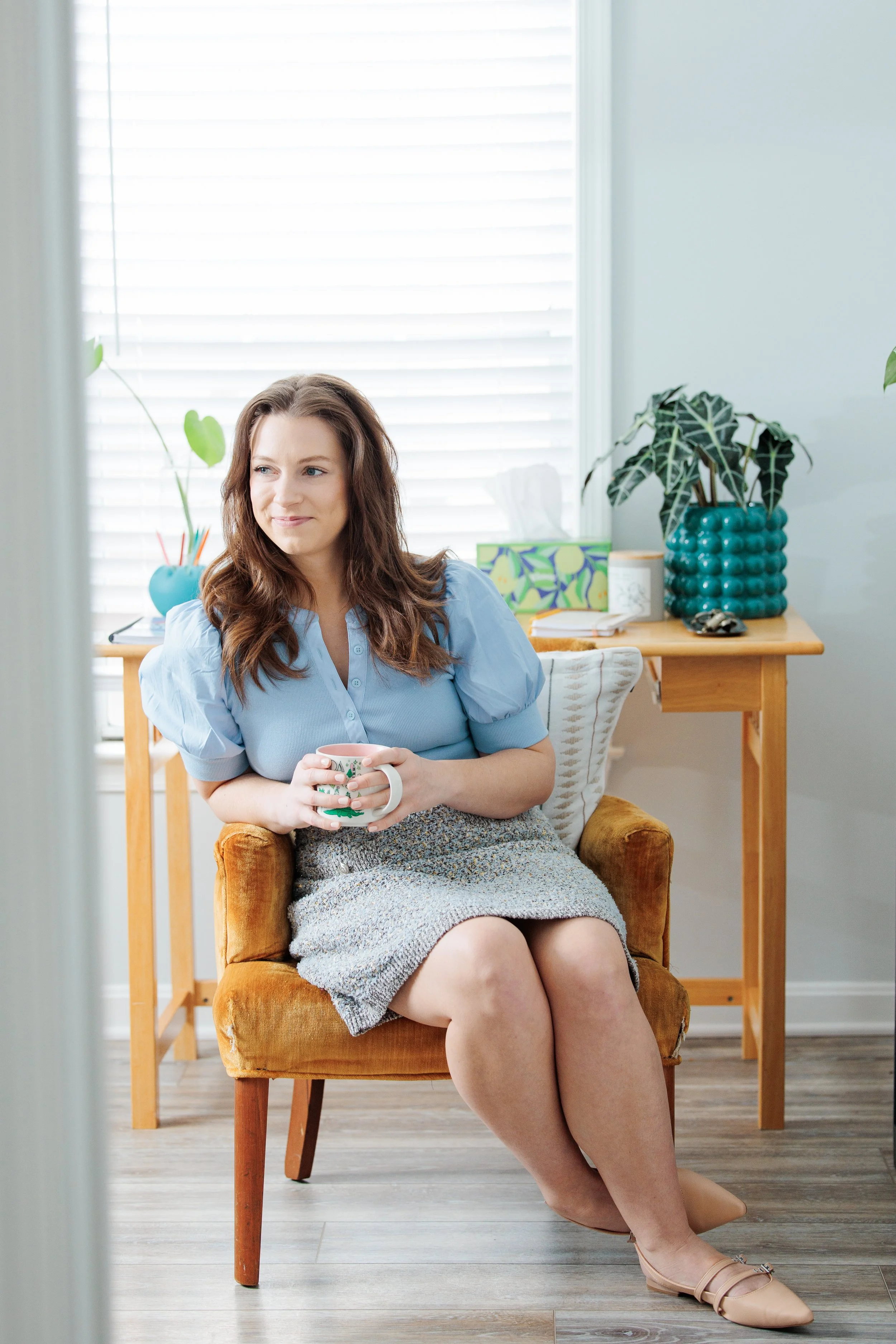
I'm Kate Moore (Regnier), LCSW, and I specialize in helping adults stop fearing panic, overcome avoidance, and get back to doing the things they love.
Through virtual therapy, we can work on changing how you respond to panic in the places where it's actually affecting your life.

Can Online Therapy Really Help With Panic Disorder and Agoraphobia?
Yes. Online cognitive behavioral therapy (CBT), including exposure-based treatment, can be effective for panic disorder and agoraphobia.
And you don't necessarily need to be sitting in the same room as your therapist to do exposure therapy.
In fact, one advantage of virtual treatment is that we can work with the situations, sensations, and behaviors you're struggling with in your everyday environment.
Maybe you're afraid of having a panic attack while driving.
Maybe going into stores alone feels impossible.
Or maybe you can leave your house, but only if you follow a long list of rules to make sure you feel safe.
Online therapy allows us to develop exposure exercises around those real-life challenges, rather than only talking about them in an office.
The goal isn't to make sure you never experience panic again. It's to help you stop organizing your life around the possibility of having another panic attack.
How Does Online Exposure Therapy for Panic Attacks Work?

Online exposure therapy is more than talking about your anxiety over video.
It's an active, collaborative treatment that helps you gradually approach the sensations and situations you've learned to fear.
Here's what that can look like.
1. Understanding Your Panic and Avoidance Patterns
We start by looking at what happens before, during, and after panic.
What sensations are you afraid of? What situations have you started avoiding? What do you do to prevent panic or make sure you can escape if it happens?
We also look at less obvious habits, like constantly monitoring your body, mentally reassuring yourself, or researching symptoms.
These behaviors can provide temporary relief while keeping you afraid of panic in the long run.
2. Practicing Exposure to Feared Panic Sensations
If you're afraid of sensations like a racing heart, dizziness, or feeling short of breath, we may use interoceptive exposure.
This involves intentionally practicing with feared physical sensations in a gradual, planned way, when medically appropriate.
For example, we might work on becoming more comfortable with an increased heart rate or feeling dizzy without immediately trying to stop the sensation.
The purpose isn't to make yourself panic for no reason.
It's to change your relationship with the sensations you've been treating as dangerous.
Many interoceptive exposure exercises can be guided during virtual sessions, with appropriate screening and planning.
3. Working on Exposures in Your Everyday Environment
This is one of the benefits of online exposure therapy.
We can develop exposure exercises around the places and situations where panic has been limiting your life.
Depending on your treatment goals, that might include:
Going into a grocery store without constantly checking for exits.
Gradually driving farther from home or returning to highways.
Standing in line without immediately leaving when anxiety appears.
Going somewhere without relying on a trusted person to feel safe.
Making plans without constantly preparing for the possibility of panic.
Some exposures may happen during a virtual session when appropriate, while others are planned between sessions.
For safety, activities such as driving are planned carefully and are not conducted through distracting live video calls.
The goal is to practice living your life without needing to eliminate every uncomfortable sensation first.
4. Reducing the Behaviors That Keep Panic in Control
Exposure therapy isn't just about going into situations that scare you.
It's also about changing what you do when anxiety shows up.
For example, you might be able to go into a store but spend the entire time checking your heart rate, staying near the exit, or reassuring yourself that you're okay.
We work on gradually reducing those behaviors so you can learn to approach situations without relying on them.
Over time, the goal is to build greater flexibility and freedom in your everyday life.
What If I Have Agoraphobia and Struggle to Leave My House?
You don't have to be housebound to have agoraphobia.
Some people with agoraphobia rarely leave home. Others go to work, run errands, and attend events, but only under certain conditions.
Maybe you avoid highways, need someone to accompany you, or won't travel beyond a certain distance from home.
Online therapy can make specialized treatment more accessible when getting to a therapist's office is itself something you're afraid of.
We can begin treatment virtually and gradually work toward the situations you've been avoiding.
And if leaving home is difficult, you don't have to wait until you can comfortably travel to an office to begin working on that fear.
The goal isn't to make your home the only place where you feel safe.
It's to help you gradually expand your world again.



Is Online Exposure Therapy as Effective as In-Person Therapy?
Research supports therapist-guided internet-delivered CBT and ERP as an effective treatment option for panic disorder, although results depend on the treatment format, individual needs, and quality of care.
Virtual sessions can provide many of the same core components of exposure-based treatment as in-person therapy, including assessment, treatment planning, guided exercises, and ongoing support.
The biggest difference is where you're doing the work.
With online therapy, you may have opportunities to practice in your actual living environment and apply what you're learning to everyday situations.
We can also plan between-session exposures so you're building confidence outside of our appointments.
Online therapy isn't the best fit for every person or situation, and we'll discuss whether virtual treatment is appropriate for your needs.

Who Is Online Panic Disorder Therapy For?
Online exposure therapy may be a good fit if:
You've experienced panic attacks for months or years and still fear having another one.
You've tried traditional coping skills but continue to feel controlled by panic.
You're avoiding driving, traveling, shopping, restaurants, or other activities.
You're constantly checking your body for signs of another panic attack.
You feel like you need to stay close to home or have someone with you.
You're tired of planning your life around the possibility of panicking.
You want specialized treatment but don't live near a therapist who focuses on panic disorder and agoraphobia.
You don't have to be completely housebound or experience panic attacks every day to benefit from treatment.
If fear of panic is influencing your decisions and limiting your life, that's something we can work on.
What Can I Expect From Virtual Therapy Sessions?
Sessions take place through a secure video platform.
You'll need a private space, a reliable internet connection, and a device that allows you to participate comfortably.
During our sessions, we'll discuss your progress, identify patterns that are keeping you stuck, and practice exposure exercises when appropriate.
You'll also have opportunities to work on exposures between appointments.
This isn't therapy where you just talk about panic for 50 minutes and hope things eventually change.
We'll work together on changing how you respond to panic in your everyday life.
Treatment is collaborative, and exposure exercises are tailored to your goals, readiness, and individual circumstances.

Where Do You Offer Online Therapy for Panic Disorder?
Regnier Restorative Counseling offers virtual panic disorder and agoraphobia therapy for adults physically located in:
Virginia
Washington DC
Maryland
Indiana
Michigan
You can attend sessions from your home or another appropriate private location within one of these jurisdictions.
I also offer in-person therapy in Reston, Virginia, for clients who prefer meeting at an office.
Frequently Asked Questions About Online Panic Disorder Therapy

Can you do exposure therapy online?
Yes. Many exposure exercises can be guided through video sessions or planned between appointments. Virtual exposure therapy can address feared physical sensations, avoidance behaviors, and everyday situations associated with panic disorder and agoraphobia.
Do I have to leave my house during online therapy for agoraphobia?
Not during every session. We can begin treatment virtually and develop a gradual exposure plan based on your goals. If leaving home is something you've been avoiding, working toward greater freedom outside your home may become part of treatment.
What if I have a panic attack during our virtual session?
We can use that experience as an opportunity to practice responding differently to panic, when clinically appropriate. The goal isn't necessarily to make the sensations disappear, but to help you change how you relate to them.
Can online therapy help if I've had panic disorder for years?
Yes. People who have struggled with panic disorder for years can still benefit from evidence-based treatment. Exposure therapy focuses on patterns of fear, avoidance, and safety behaviors that may continue even after you've tried other approaches.
Do you accept insurance for online therapy?
Regnier Restorative Counseling is a private-pay practice and does not bill insurance directly. Superbills are available for clients who wish to explore possible out-of-network reimbursement through their insurance plans.
How do I get started with online panic disorder therapy?
The first step is to schedule a consultation. We can discuss what you've been experiencing, what you've already tried, and whether specialized virtual exposure therapy may be a good fit for your needs.

Ready to Stop Letting Panic Control Your Life?
Maybe you've spent years trying to figure out how to stop panic attacks.
You've learned coping skills, researched symptoms, and tried to prepare yourself for every possible situation.
But you're still afraid of another attack.
And that fear has started making decisions for you.
I'm Kate Moore (Regnier), LCSW, and I specialize in helping adults with panic disorder and agoraphobia change their relationship with panic through exposure-based therapy.
You don't have to wait until panic disappears to start getting your life back.
Whether you're hoping to drive farther from home, travel again, go places independently, or simply stop constantly worrying about another panic attack, we can work toward those goals together.
I offer specialized online panic disorder therapy throughout Virginia, Washington DC, Maryland, Indiana, and Michigan, as well as in-person sessions in Reston, VA.